
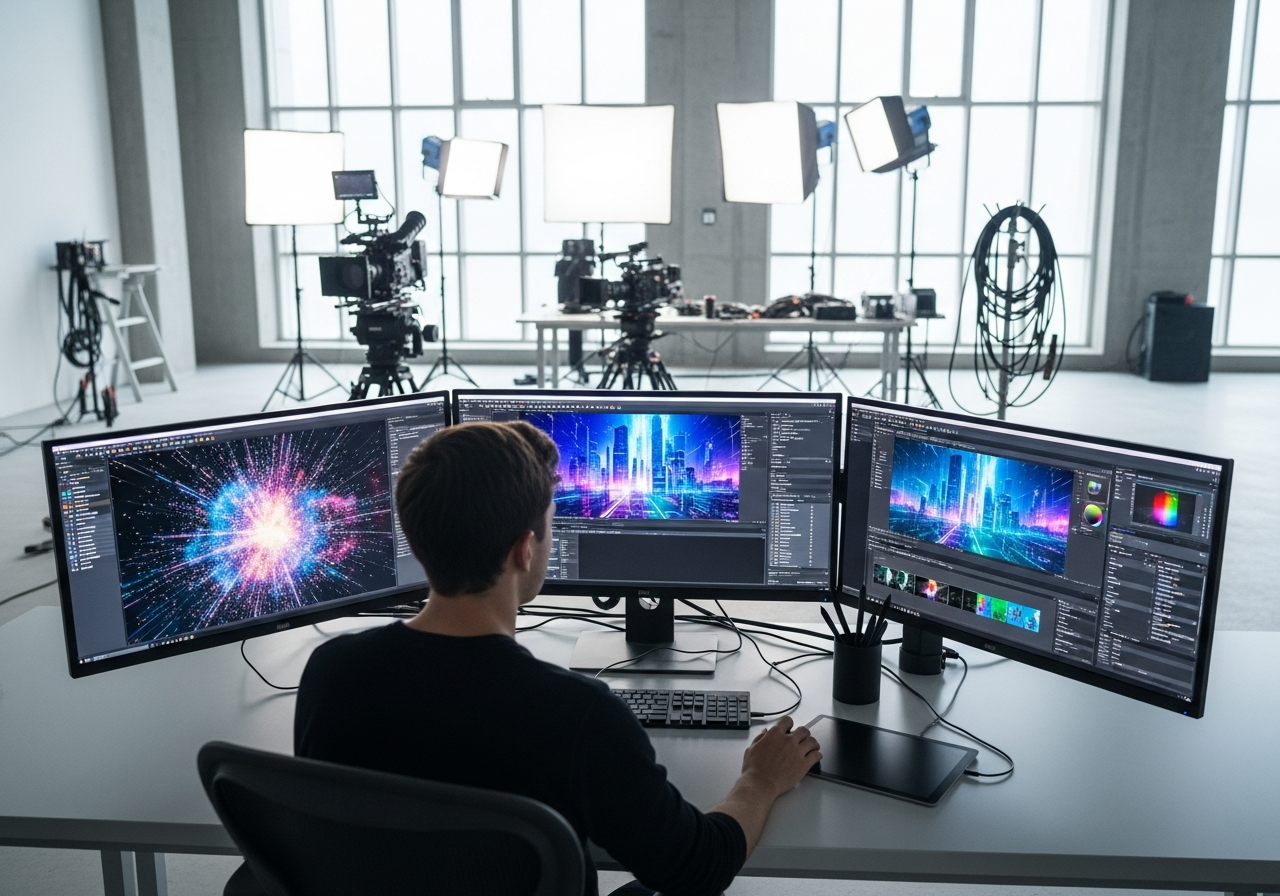
Junior compositors entering Montreal’s film and TV sector can expect starting salaries between $45,000 and $65,000 CAD, according to aggregated data from leading salary platforms. PayScale reports early-career compositors earning around $64,600 CAD, while Glassdoor indicates similar ranges near $62,000 CAD, and specialized VFX industry guides suggest entry positions start between $45,000 and $58,000 CAD.
The progression path typically sees mid-level compositors earning $60,000 to $75,000 CAD, with senior professionals commanding $80,000 to $90,000 CAD annually. However, significant variance exists across data sources, with PayScale averaging $63,000 CAD while Indeed reports higher averages around $89,000 CAD. Montreal’s VFX compensation generally trails behind Vancouver and Toronto markets, though Quebec’s favorable tax benefits help offset lower base salaries, creating more competitive take-home pay for industry professionals.
Current Salary Benchmarks for Junior Compositors
The Montreal VFX market shows distinct salary tiers based on experience levels, with junior compositors typically classified as professionals with 1-4 years of industry experience. Current 2026 data reveals a competitive but challenging compensation landscape, where entry-level positions start modestly but offer clear advancement opportunities.
Salary benchmarks vary significantly depending on the data source and methodology used, creating a complex picture for professionals seeking accurate compensation expectations. The following table consolidates major industry sources to provide a comprehensive view of current market rates across all compositor experience levels.
| Role Level | Montreal Avg Salary (CAD) | Source | Range/Notes |
|---|---|---|---|
| Entry-Level (0-1 years) | $45,000 – $55,000 | VFX Industry Guide | First-time hires, intern transitions |
| Junior (1-4 years) | $55,000 – $65,000 | PayScale | $64,600 average reported |
| Junior (1-4 years) | $58,000 – $66,000 | Glassdoor | ~$62,000 equivalent range |
| Mid-Level (3-7 years) | $65,000 – $78,000 | Combined Sources | Established professionals |
| Senior (6+ years) | $80,000 – $95,000 | Industry Average | Lead compositor roles |
Data Sources and Reliability
PayScale and Glassdoor provide the most granular data for Montreal’s VFX sector, drawing from actual employee submissions and employer postings. PayScale’s methodology focuses on verified salary reports, making their $64,600 average particularly reliable for junior positions. Glassdoor complements this with company-specific insights, though some international salary data requires conversion from Euro rates.
Indeed tends to report higher averages for mid-level positions, potentially reflecting premium roles or including overtime compensation. Most 2026 data remains current and relevant, though industry guides may lag behind rapid market changes in the post-pandemic VFX boom.
Entry-Level vs Early Career Distinctions
- Entry-level positions (0-1 year) typically start between $45,000-$55,000 CAD and focus on basic compositing tasks under supervision
- Early career professionals (1-4 years) command $55,000-$65,000 CAD with increased autonomy and project responsibility
- Skill progression from basic keying and tracking to complex multi-layer compositing drives the salary differential
- Portfolio quality and demo reel strength significantly impact positioning within these ranges
- Studio size and project budget directly influence starting offers, with larger productions offering premium rates
Typical Progression Timeline
Montreal’s VFX industry follows a relatively predictable career progression pattern, with junior compositors (0-2 years) earning $45,000-$60,000 CAD before advancing to mid-level roles (3-5 years) at $60,000-$75,000 CAD. Senior positions (6+ years) typically command $75,000-$90,000 CAD, though exceptional talent can exceed these ranges.
Promotions and salary increases are primarily driven by demonstrated skill improvement, portfolio development, and the ability to handle increasingly complex shots independently. Experience with industry-standard software like Nuke, along with specialized skills in areas like environment work or creature compositing, can accelerate progression timelines significantly.
Year-by-Year Salary Milestones
The following progression reflects typical advancement patterns in Montreal’s VFX sector, based on industry averages and professional development benchmarks. Growth percentages represent annual increases combining skill development, experience accumulation, and market rate adjustments.
These milestones assume consistent employment, portfolio improvement, and active skill development. Economic factors, studio performance, and individual negotiation skills can significantly impact actual progression rates within the industry.
| Years of Experience | Expected Salary Range (CAD) | Key Milestones | Growth % |
|---|---|---|---|
| 0-1 Years | $45,000 – $55,000 | Basic compositing, roto work | Starting rate |
| 1-2 Years | $52,000 – $60,000 | Independent shot completion | 8-12% |
| 2-3 Years | $58,000 – $66,000 | Complex keying, tracking skills | 6-10% |
| 3-4 Years | $62,000 – $70,000 | Senior junior, mentoring others | 5-8% |
| 4-5 Years | $68,000 – $76,000 | Mid-level promotion | 8-15% |
| 5+ Years | $72,000 – $85,000 | Sequence supervision | 4-7% |
Factors Driving Salary Growth
Several key factors determine how quickly junior compositors can advance their earning potential in Montreal’s competitive VFX market. Technical proficiency, particularly advanced Nuke skills and specialized techniques, forms the foundation of salary progression. Portfolio quality and demo reel strength directly impact both initial hiring decisions and promotion opportunities within studios.
Strategic career moves, including studio transitions for salary increases and taking on mentoring responsibilities, can accelerate earning potential significantly. Professional networking, continuous learning, and staying current with industry trends also play crucial roles in compensation growth throughout a compositor’s career development.
- Master advanced Nuke techniques including 3D compositing, particle systems, and custom gizmo development to command premium rates
- Build a exceptional demo reel showcasing diverse shot types from invisible fixes to hero creature work
- Strategic studio transitions every 2-3 years typically yield 10-20% salary increases compared to internal promotions
- Develop mentoring and training skills to qualify for senior roles with team leadership responsibilities
- Specialize in high-demand areas like environment work, digital makeup, or real-time compositing techniques
- Maintain active professional networks through industry events, online communities, and collaborative projects
Impact of Skills and Certifications
Demo reel quality remains the primary factor in salary negotiations, with exceptional work samples often overriding experience limitations. Software mastery extends beyond basic Nuke proficiency to include advanced techniques like deep compositing, stereo workflows, and integration with 3D packages like Maya and Houdini.
While formal certifications add value to junior profiles, they remain uncommon in the VFX industry compared to other tech sectors. Foundry’s Nuke certification program provides some credibility, but hands-on portfolio work and production experience typically carry more weight with hiring managers and salary decisions.
Employer and Project Influence
Larger studios, particularly those with Vancouver connections averaging $100,000 CAD, often offer higher compensation packages than smaller Montreal-based facilities. Project budgets directly impact available salary ranges, with major film productions typically offering premium rates compared to television or commercial work.
Performance bonuses remain limited in Montreal’s VFX sector, unlike software development or finance industries. Most compensation increases come through base salary negotiations, promotion opportunities, or transitioning to higher-paying studios rather than variable compensation structures.
Montreal vs Other Canadian Hubs
Montreal’s VFX sector offers competitive opportunities despite lower base salaries compared to Vancouver and Toronto markets. The city benefits from Quebec’s generous tax incentives for media production, which attracts major international projects and provides job stability for local compositors.
When comparing raw salary figures, Vancouver leads Canadian markets with significantly higher compensation levels, while Toronto offers moderate premiums over Montreal rates. However, Quebec’s unique tax benefits for arts and media workers, combined with lower living costs, help narrow the effective income gap between these major Canadian VFX centers.
| City | Junior Compositor Avg (CAD) | Mid-Level Avg (CAD) | Notes |
|---|---|---|---|
| Montreal | $45,000 – $65,000 | $65,000 – $78,000 | Quebec tax benefits offset lower base |
| Vancouver | $75,000 – $100,000 | $95,000 – $120,000 | Highest Canadian rates, major studios |
| Toronto | $52,000 – $72,000 | $72,000 – $88,000 | 5-15% premium over Montreal |
| Halifax | $40,000 – $55,000 | $58,000 – $70,000 | Emerging market, lower competition |
Regional Cost of Living Adjustments
Montreal’s significantly lower cost of living, particularly for housing and transportation, helps offset the salary differential with other Canadian VFX centers. Average rental costs in Montreal remain 25-40% below Vancouver and Toronto rates, while maintaining similar quality of life standards.
When adjusted for purchasing power and after-tax income, Montreal compositors often achieve comparable take-home earnings to their counterparts in higher-salary markets. Quebec’s cultural sector tax advantages, combined with lower everyday expenses, create a financially viable alternative to pursuing opportunities in more expensive Canadian cities.
Strategies to Accelerate Progression
Successful career acceleration in Montreal’s VFX industry requires a multi-faceted approach combining technical skill development, strategic networking, and continuous professional growth. Industry professionals who actively engage with the local VFX community through events like the Montreal International Animation Film Festival and FMX networking sessions consistently outperform peers in salary progression.
Freelance opportunities and contract work provide valuable experience diversity while potentially commanding premium hourly rates. Additionally, staying current with emerging technologies, particularly AI-assisted compositing tools and real-time rendering workflows, positions junior artists for future industry demands and higher compensation brackets.
- Actively network at Montreal VFX industry events, including SIGGRAPH chapters and local studio open houses
- Pursue strategic freelance projects to diversify experience and build relationships across multiple studios
- Invest time in learning AI-enhanced compositing tools and machine learning applications for VFX workflows
- Develop specialized skills in high-demand areas like virtual production, LED wall compositing, or real-time engines
- Create and maintain strong online presence through personal portfolio websites and professional social media
- Seek mentorship opportunities and actively participate in junior artist development programs
Negotiation and Career Moves
Strategic employer transitions typically yield the most significant salary increases, with industry professionals often securing 10-20% raises when switching studios compared to modest annual increases for internal promotions. Timing these moves strategically around project completions and industry demand cycles maximizes negotiation leverage.
Developing mentoring capabilities and demonstrating leadership potential helps qualify junior artists for promotion opportunities with supervisory responsibilities. These roles often include substantial salary increases while providing valuable experience for future career advancement within the VFX management track.
Future Trends in VFX Pay
Industry analysts predict AI integration will increase demand for junior compositors who can effectively collaborate with automated tools, potentially driving salary growth for tech-savvy professionals. Virtual production and real-time compositing workflows are creating new specialized roles that command premium compensation.
Salary forecasts for 2026 suggest stable growth in Montreal’s VFX sector, supported by continued government incentives and increasing international production activity. However, global economic factors and streaming industry consolidation may impact project budgets and available compensation pools.
Challenges and Realistic Expectations
Montreal’s VFX industry presents both opportunities and challenges for junior compositors seeking career advancement. Crunch culture remains prevalent during project deadlines, with limited overtime compensation compared to other professional sectors. Work-life balance can be challenging during peak production periods, affecting overall job satisfaction despite competitive base salaries.
Significant variance exists between reported salary ranges across different data sources, reflecting the diverse nature of VFX employment from small boutique studios to major international facilities. Junior professionals should consult multiple salary sources and consider factors beyond base compensation, including benefits, job security, and professional development opportunities when evaluating career decisions.
The competitive nature of Montreal’s VFX market requires continuous skill development and networking to maintain career momentum. Economic fluctuations in the entertainment industry can impact project availability and compensation levels, making diversified skill sets and financial planning essential for long-term career stability in the sector.
Pros and Cons of Montreal VFX Careers
| Pros | Cons |
|---|---|
| Quebec tax rebates benefit arts workers | Lower base salaries vs Vancouver/Toronto |
| Vibrant job market with major studios | Intense competition for premium positions |
| Lower cost of living offsets pay differences | Seasonal project fluctuations |
| Rich cultural scene and bilingual environment | Crunch culture during production peaks |
| Government support for media production | Limited overtime compensation |
| Strong networking and mentorship opportunities | Language requirements for some positions |